
For thousands of Clarksville residents, the daily commute to Fort Campbell is not just routine, it is a commitment with real consequences if something goes wrong. A car that will not start on a morning with a five a.m. formation, or a breakdown at the gate during a shift change, creates a level of stress that goes well beyond the usual frustration of car trouble. Keeping a daily driver genuinely dependable matters more for Fort Campbell commuters than it does for the average driver, and a few specific maintenance habits make a real difference in avoiding that worst case scenario.
Why Fort Campbell Commuters Face Unique Pressure
Military schedules do not offer much flexibility. A formation time or shift start is not something you can push back by twenty minutes because your car struggled to start, and the consequences of being late extend well beyond a personal inconvenience. This reality means Fort Campbell commuters benefit from thinking about vehicle reliability differently than someone with a more flexible civilian schedule, prioritizing preventive maintenance specifically because there is very little room for an unexpected breakdown to be anything other than a serious problem.
Early morning starts are also a factor worth considering. Many Fort Campbell commutes begin well before sunrise, often in the coldest part of a Tennessee winter morning, which is exactly when a marginal battery or a cooling system with low fluid is most likely to reveal a weakness that seemed unnoticeable during a normal daytime drive.
Battery Health Deserves Extra Attention
A battery that struggles is one of the most common causes of a no start situation, and it tends to fail at the worst possible moments, typically during a cold morning when demand on the battery is already at its highest. For Fort Campbell commuters, having battery health checked proactively, rather than waiting for a slow crank to become a complete failure, is one of the simplest ways to avoid a missed formation or a late arrival at the gate.
Battery age is worth tracking specifically, since most batteries begin showing measurable decline somewhere between three and five years, often well before they fail outright. A battery that is approaching this age range is a reasonable candidate for proactive testing even if it currently starts the car without any obvious hesitation, simply because the margin for a sudden failure narrows considerably once a battery has passed this point.
If you have already experienced a starting failure and want to understand what might be behind it, our guide on the top 10 reasons your car won’t start and how to get back on the road covers many of the common causes and what typically needs attention to resolve them before they happen again.
Tires And Brakes Matter More With A Fixed Schedule
A tire losing air slowly, or brakes that have started to wear thin, are the kind of issues that a flexible civilian driver might let slide for a few extra weeks. For someone commuting to Fort Campbell on a strict schedule, these same issues carry more weight, since a flat tire discovered in the driveway at five in the morning leaves no good options for getting to formation on time. Checking tire pressure and tread regularly, along with having brakes inspected before they start showing obvious warning signs, reduces the odds of this kind of unwelcome surprise.
Given how many Fort Campbell commuters travel similar routes along Fort Campbell Boulevard or Highway 41A during peak shift change times, tire and brake wear from consistent stop and go traffic at gate checkpoints is also worth factoring into a maintenance schedule, since this pattern of frequent stopping and idling near security checkpoints adds a bit more wear than a typical open road commute would.
Fluids And Basic Checks Worth Doing Regularly
Engine oil, coolant, and transmission fluid all play a role in keeping a daily driver dependable, and checking these on a consistent schedule rather than waiting for a dashboard warning light gives you a much better chance of catching a developing issue before it becomes a breakdown. This is particularly relevant for commuters whose vehicles see consistent daily use with little room for an unplanned repair to disrupt a demanding schedule.
For commuters who split time between a personal vehicle and long stretches of highway driving to visit family outside Clarksville, it is worth remembering that consistent daily use adds up differently than occasional weekend driving. A vehicle that covers the same round trip to Fort Campbell every single workday accumulates wear at a steady, predictable rate, which actually makes it easier to plan maintenance around mileage milestones rather than guessing when a fluid change or inspection is due.
Windshield wipers, headlights, and other basic safety equipment deserve regular attention as well, especially for commuters driving before sunrise or during Tennessee’s frequent rain showers. A burned out headlight or a wiper blade that smears more than it clears is a small issue that becomes a bigger problem during an early morning drive in poor visibility conditions.
Why Proactive Maintenance Beats Reactive Repairs Here
The general principle behind good vehicle maintenance, catching small issues before they become big ones, applies to every driver, but it carries extra weight for someone whose schedule genuinely cannot absorb an unexpected delay. Building a habit of regular checks, rather than waiting for a problem to announce itself through a warning light or a strange noise, is the single most effective way to keep a daily driver dependable enough to handle a demanding military commute without incident.
Why A Mobile Mechanic Fits This Kind Of Commute Well
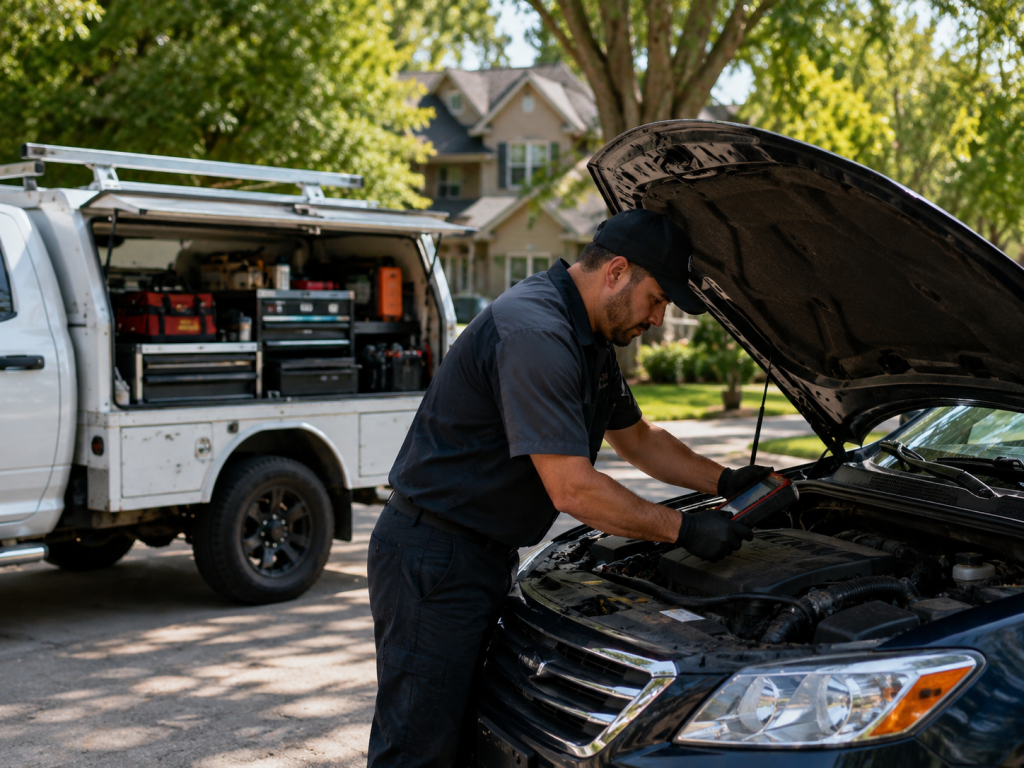
Fort Campbell commuters often have limited flexibility to sit in a shop waiting room or coordinate a drop off and pickup around an already demanding schedule. A mobile mechanic can come to your home in Clarksville, often outside of standard duty hours, and handle inspections, battery testing, and routine maintenance without requiring you to carve out a chunk of your already limited personal time.
We covered the broader advantages of this approach in our article on why mobile mechanics are better than traditional auto shops in Clarksville, which explains how convenience and flexible scheduling come together, particularly valuable for anyone balancing vehicle maintenance around a military schedule that leaves little room for error.
Keep Your Commute Dependable
A car that gets you to Fort Campbell on time, every time, is not something to take for granted, and a bit of proactive attention goes a long way toward making that reliability something you can count on rather than hope for. Checking your battery, tires, brakes, and fluids on a consistent schedule, rather than waiting for a warning sign, is the simplest way to keep your daily driver ready for whatever your schedule demands.
If it has been a while since your vehicle had a thorough checkup, visit our homepage to learn more about our services, or reach out through our contact us page to schedule a visit at your home at a time that fits around your schedule.
A little preventive attention now can help make sure your car is always ready for the next early morning drive to Fort Campbell.