
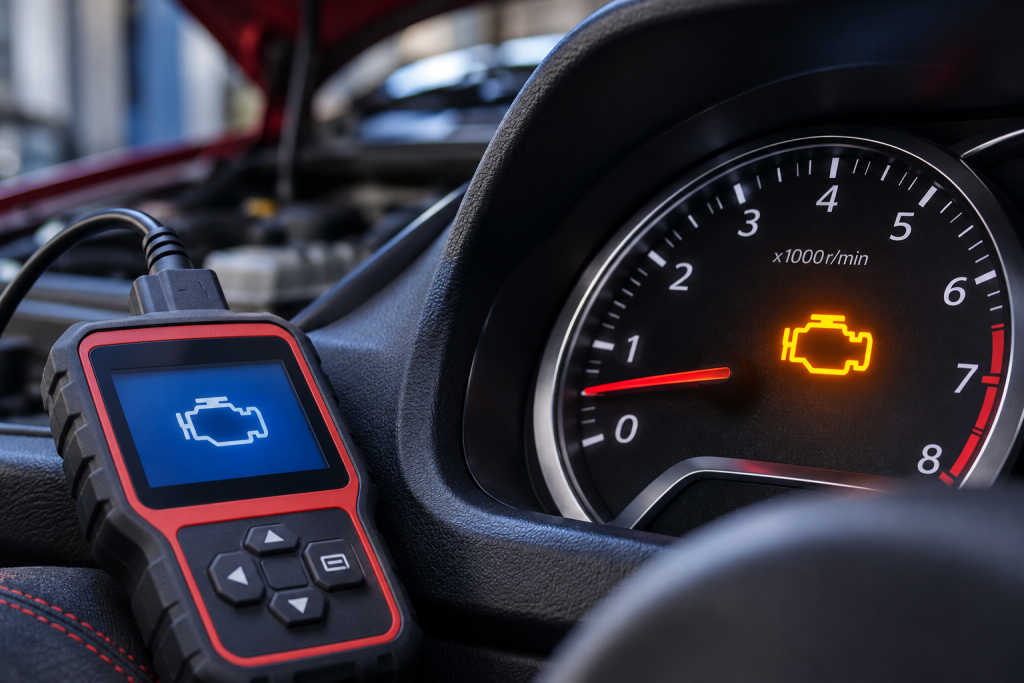
The check engine light is one of the most ignored and most misunderstood lights on the dashboard. It glows, you wonder whether it is serious, and many drivers decide to wait and see. Sometimes the cause is minor. Sometimes it is an early warning of something that gets worse and costs more the longer it runs. The trouble is that the light alone does not tell you which one you are dealing with. This guide explains what the check engine light means, the difference between a steady light and a flashing one, the common reasons it comes on, why a proper scan beats guessing and what to do next. If you are searching for check engine light help in Clarksville, TN, start here.
What the Check Engine Light Actually Means
Your car has a computer, often called the engine control module, that watches the engine, the emissions system and many other parts through a network of sensors. When it detects a reading that falls outside the expected range, or a system that is not working the way it should, it stores a trouble code and turns on the check engine light. In other words, the light is not a diagnosis. It is a signal that the computer has found something worth looking at. The stored code tells a technician where to begin, and that is far more useful than the light alone.
Steady Light vs. Flashing Light
How the light behaves matters a lot.
- A steady light means the computer has detected a problem that should be checked soon. It is not usually an emergency, but it should not be ignored. Drive gently and schedule an inspection.
- A flashing or blinking light is more serious. It often signals an active engine misfire, which means fuel is not burning properly in one or more cylinders. Unburned fuel can overheat and damage the catalytic converter, a part that can mean a larger repair. If the light is flashing, reduce your speed, avoid hard acceleration and heavy loads, and have the car checked right away. If the car shakes badly, loses power or runs rough, pull over safely and call for help.
Also pay attention to other warning lights that come on at the same time. An oil pressure warning or an engine temperature warning is a reason to pull over safely and turn the engine off. Your owner’s manual explains what each light on your dashboard means.
Common Reasons the Light Comes On
There are many possible causes, ranging from simple to serious. Some of the most common include:
- A loose, damaged or missing gas cap. This can break the seal on the fuel system and trigger a code. It is one of the first things to check, and it is a simple fix.
- Oxygen sensor problems. These sensors help the engine manage the fuel mixture and emissions. A failing one can hurt fuel economy and performance.
- Worn spark plugs, ignition coils or wires. These can cause misfires and rough running.
- A failing catalytic converter. This part cleans exhaust gases. It can fail from age, contamination or damage from misfires.
- A dirty or faulty mass airflow sensor. This sensor measures the air entering the engine, and problems can cause hesitation or poor mileage.
- Evaporative emissions system leaks. This system traps fuel vapors, and small leaks in hoses or valves can set a code.
- Vacuum leaks or intake problems. Air entering where it should not can upset the fuel mixture.
- Fuel system issues, such as a weak pump or clogged injectors.
- Battery or charging system trouble, which can confuse sensors and trigger codes.
- Sensor or wiring faults, where a damaged wire or connector throws off a reading.
Because so many different things can turn the light on, you cannot tell the cause by looking at the dashboard. That is where scanning comes in.
What an OBD2 Scan Does
Every car sold in the United States for many years has a standard diagnostic port, usually found under the dashboard near the driver’s knees. A scan tool plugs into that port and reads the trouble codes stored by the computer. This standard system is commonly called OBD2. A scan can show:
- The trouble code or codes, which point to the system or circuit that has a problem.
- Freeze frame data, a snapshot of engine conditions at the moment the code was set.
- Readiness status, which shows whether the emissions monitors have completed their self checks.
- Live data, with more advanced tools, so a technician can watch sensors and systems as the engine runs.
Why a Scan Beats Guessing
It is tempting to guess. A friend says it is probably the oxygen sensor, or an online post suggests a part, and you order it and install it. Sometimes that works. Often it does not, and you have spent money and time on a part that was never the problem. Here is why scanning matters.
- A code points to a system, not always a part. A code that mentions a sensor may actually be caused by a vacuum leak, a wiring fault or something else that makes the sensor read oddly. Replacing the sensor alone may not clear the problem.
- It saves money. Fixing the right thing the first time avoids buying parts you do not need.
- It catches small problems before they grow. A minor issue found early is often easier to deal with than a major failure later.
- It separates urgent from routine. A scan helps decide whether you can keep driving or need to stop.
- It gives a technician a head start, including the data to test the right component.
It is also worth knowing that disconnecting the battery or clearing codes to make the light go away does not fix anything. The underlying problem stays, and the light usually returns. Clearing codes also erases helpful information a technician might need.
What About Basic Code Readers?
Inexpensive code readers are available, and some drivers find them handy for a first look. They can tell you the code, which can be a helpful start. But a code is only the beginning. Interpreting it, testing the circuit and finding the real cause usually takes training, experience and more advanced tools. If you use a reader, treat the result as a clue and not a final answer.
What to Do When the Light Comes On
- Stay calm and notice how the light behaves. Is it steady or flashing?
- Check how the car feels. Is it running rough, shaking, losing power or making noises? Do you smell anything unusual?
- If the light is flashing or the car is running badly, reduce speed, avoid hard acceleration and heavy loads and get help promptly. If it is severe, pull over safely.
- Check the gas cap. Make sure it is on and tightened until it clicks. If that was the cause, the light may go off after some driving.
- Look at the dashboard for other warning lights, and consult your owner’s manual.
- Schedule a scan and diagnosis instead of waiting. Do not ignore it for weeks.
Why It Matters for Commuters
If you drive a long way each day, a check engine light that goes ignored can turn into a problem far from home. A small fuel or ignition issue can reduce fuel economy and performance, and a larger failure can leave you stranded on the road. Our guide on keeping a car road ready for Fort Campbell commuters covers other habits that help long distance drivers avoid surprises.
Staying on Top of Maintenance When Life Gets Busy
Busy schedules, moves and long work days make it easy to put car problems on the back burner. Keeping a record of service and warning lights can help you and your technician track what has happened over time. If this fits your situation, our car maintenance tips for military families offers practical ideas for keeping a car in good shape through a busy life.
How a Mobile Mechanic Can Help
Mobile diagnostics make a check engine light easier to deal with. A technician can come to your home or workplace, connect a scan tool, read the codes, check basic items such as the gas cap, look at the battery and charging system and explain what the results suggest. Many common causes can be diagnosed and repaired on site. Some problems need deeper testing, specialized equipment or a lift, and may need a shop. A good technician will be honest about what can be done where you are, and will not replace parts just to make the light go off.
Quick Check Engine Light Checklist
- Note whether the light is steady or flashing.
- If flashing, slow down and get help right away.
- Check that the gas cap is tight.
- Watch for rough running, power loss or odd smells.
- Do not ignore the light or just clear the codes.
- Get a proper scan and diagnosis.
- Fix the cause, not just the code.
The light is your car asking for attention. If yours is on, visit the Mobile Mechanic Pros of Clarksville homepage to learn more, or contact us to schedule a scan.